Understanding Radon Mitigation York PA Options for a Safer Home
Radon in York County: A Real Concern
When I moved into my first home in York County, the last thing on my mind was invisible gas. But after a friend mentioned his basement radon system, I started reading. The EPA ranks radon as a leading cause of lung cancer after smoking, and Pennsylvania radon levels are among the highest in the country. The geology here, especially in York PA and surrounding areas, creates a natural pathway for radon to seep into homes through foundation cracks and sump pump openings.
I spent years in the construction trade before shifting focus to radon abatement. What I have seen in homes across York PA is a mix of awareness and confusion. Homeowners know radon is bad, but they are not sure what to do about it. That is where understanding the full picture of radon mitigation York PA becomes important. It is not just about installing a fan. It is about matching the right system to the house, the soil, and the budget.
Why Radon Testing Comes First
Before any work begins, you need a radon test. I always recommend a continuous radon monitor for the most accurate reading, especially if you are serious about protecting your family. Short-term tests can give you a snapshot, but radon levels fluctuate with weather, season, and how you run your HVAC system. A continuous monitor tracks those changes over days or weeks.
If your test shows levels at or above the EPA action level of 4 picocuries per liter, it is time to act. Do not panic, but do not ignore it either. Radon mitigation systems are proven to reduce levels dramatically, often to well below 2 pCi/L. The first step is a professional assessment, not a sales pitch. A good contractor like Dan Jenkins will walk through your crawl space or basement, check the foundation, and look for cracks, utility penetrations, and the condition of your sump pump area.
Active Versus Passive Mitigation
There are two main approaches: passive mitigation and active mitigation. Passive systems rely on natural pressure differences and a vent pipe running from the sub-slab to the roof. They work best in homes built with radon-resistant construction, which is rare in older York County homes. Active systems use a radon fan to create suction under the slab, pulling radon-laden air from the soil and venting it safely above the roofline.
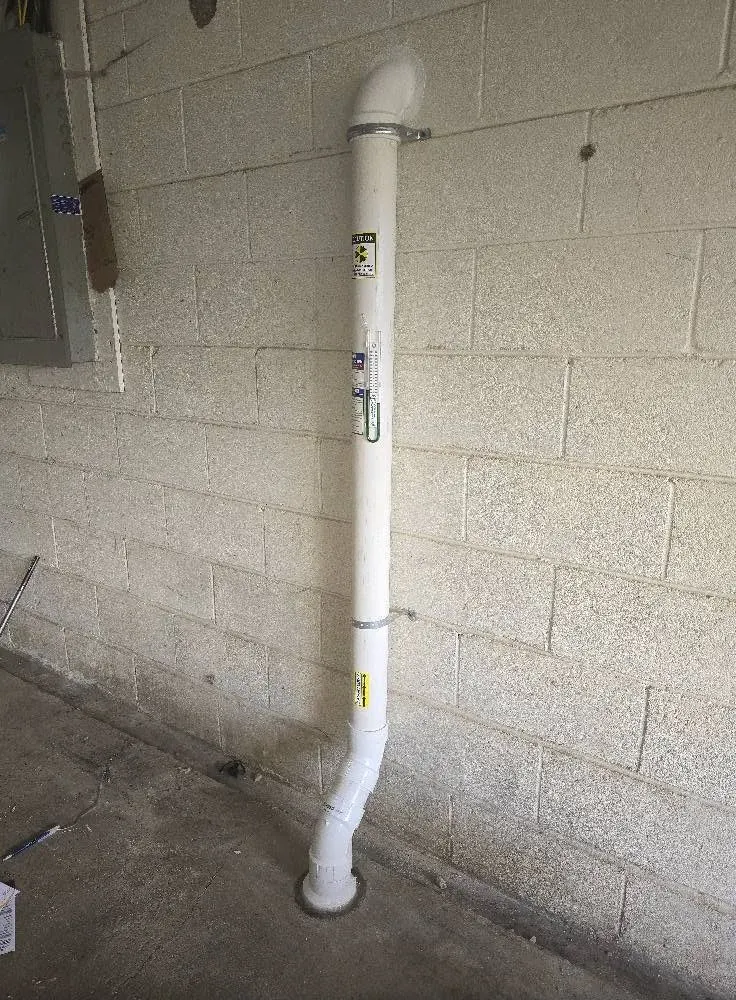
Active mitigation is the standard for most retrofits. The most common method is sub-slab depressurization, also called soil suction. A contractor drills a hole through the basement floor, digs a small pit, and runs a pipe from that pit to the outside. The radon fan is mounted either in the attic or on the exterior of the house. The fan creates negative pressure beneath the slab, which stops radon from being drawn into the living space.
I have seen homes where a simple passive system dropped levels by 50 percent, but for the majority of houses in York PA, active mitigation is the reliable choice. The cost difference is not huge, and the peace of mind is worth it.
Key Components of a Basement Radon System
A well-designed basement radon system includes more than just a fan. The pipe needs to be sized correctly, usually 3- or 4-inch PVC, and the fan must be rated for continuous operation. RadonAway makes some of the most durable fans in the industry. They are designed to run for years with minimal maintenance. The discharge point must be above the roofline and away from windows or air intakes so the radon does not re-enter the house.
Sealing foundation cracks and gaps around the sump pump is also critical. You can think of it as patching the holes in the floor so the fan can do its job. Without good sealing, the system has to work harder and might not achieve the same reduction. I use a high-quality sealant designed for radon work, not just caulk from the hardware store.
What to Expect During Installation
Installation usually takes one day. The contractor will drill a core hole in the basement slab, dig a small pit, run the pipe, mount the fan, and seal everything. After installation, a follow-up radon test is essential to confirm the system is working. A continuous radon monitor placed in the lowest livable area for at least 48 hours will show the new levels.
Most systems are quiet. The radon fan produces a low hum, but it should not be disruptive. If you hear rattling or vibration, something is wrong. Good installation includes a manometer, a small gauge that shows whether the system is maintaining suction. Check it monthly.
Common Misconceptions
- Radon only affects basements. Radon enters through the lowest level, but it mixes with indoor air and can affect upper floors. The whole home benefits from mitigation.
- Opening windows solves the problem. Ventilation helps temporarily, but it is not a permanent fix. Radon pressure from the soil is constant.
- Radon mitigation is expensive. The cost for a typical active system in York PA ranges from $800 to $1,500. Compared to the health risk, it is one of the best investments you can make.
The Role of Professional Installation
DIY radon mitigation is possible, but I have seen too many homeowners create bigger problems. A poorly placed fan can pull radon from one area while drawing it into another. Wrong pipe slope can cause condensation that blocks airflow. And if the discharge point is too low, you are just recycling the gas back into the house.
Dan Jenkins, who runs a local service in York County, brings years of hands-on experience with Pennsylvania radon geology. He knows the difference between a house built on limestone and one on shale, and how that affects soil suction. That kind of local knowledge matters. It is not just about installing a fan; it is about understanding the specific conditions of your home and your neighborhood.
Long-Term Maintenance and Monitoring
After your system is installed, you should test your home every two years or after any major renovation. The EPA recommends long-term testing for the most accurate picture. A continuous radon monitor can stay in place and give you real-time data. Some newer models connect to your phone, so you can check levels while on vacation.
If you have a sump pump, make sure the system does not interfere with its operation. In some homes, the radon fan can pull moisture from the soil, which is fine, but the sump pump itself should remain sealed. I have had to re-seal sump pump covers that were left loose after a repair, which let radon pour in.
Final Thoughts on Radon Mitigation York PA
Living in York County means living with the reality of radon. It is not something to fear, but it is something to manage. The phrase radon mitigation York PA covers a range of solutions, from simple sealing to full active systems. The key is to start with a test, get a professional assessment, and choose a system that fits your home and your budget.
I have worked in homes where the radon level was over 100 pCi/L. After a properly designed sub-slab depressurization system with a RadonAway fan, the levels dropped to under 2 pCi/L. That is a life-changing difference. If you are in York PA and have not tested your home yet, I encourage you to do it. The data is easy to gather, and the fix is proven.
Radon mitigation is not a luxury. It is a basic step in maintaining a healthy home. With the right contractor and the right system, you can breathe easier knowing you have done what matters.
Ends · RADONMITIGATIONYORKPAREVIEW